Septic Tank Pump Maintenance: How to Extend the Life of Your System's Most Important Component
If your property has a pump chamber, septic tank pump maintenance deserves a spot on your yearly to-do list. That pump moves treated wastewater out to your drain field, and when it stops working, the whole system can back up faster than most homeowners expect. In the Texas Hill Country, where clay soil, rocky ground, and heavy rain already put stress on septic systems, a healthy pump makes a real difference. This guide explains how the pump, floats, and alarm work together, what normal cycling looks like, which warning signs to catch early, and how to keep your pump running for years.
Does Your System Even Have a Pump?
Not every system does. A traditional gravity system lets wastewater flow from the house to the tank and out to the drain field with no moving parts. A pump comes into play when the drain field sits higher than the tank, when the soil needs effluent delivered in measured doses, or when the system is an aerobic, drip, or mound design. Because shallow bedrock and heavy clay are common across the Hill Country, plenty of local properties end up with one of these setups.
Not sure what you have? Look for an alarm panel on an exterior wall or in the garage, a second lid near the tank, or a control box with a light and buzzer. Our septic system maintenance page explains what routine service looks like for systems of all types.
How the Pump, Floats, and Alarm Work Together
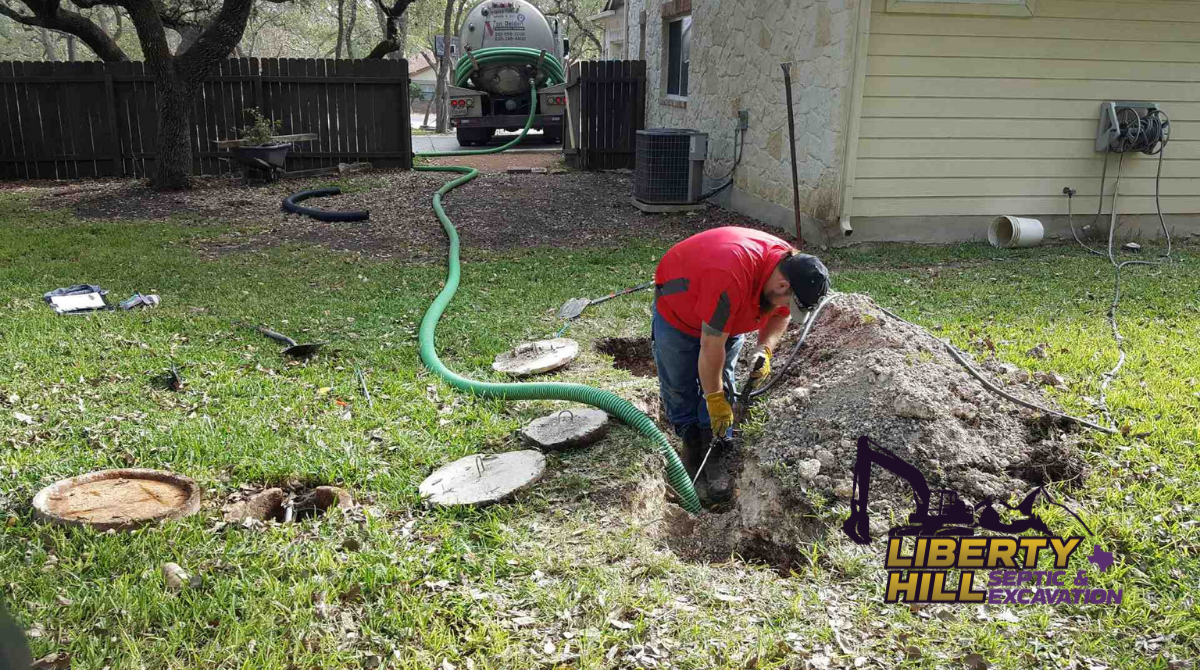
The pump sits in a pump chamber, which collects liquid from the septic tank before it heads to the drain field. Float switches in that chamber tell the pump what to do:
- Off float: Shuts the pump down when the liquid drops to a safe level, so the pump never runs dry.
- On float: Starts the pump when the liquid rises to a set level, sending a measured dose to the drain field.
- Alarm float: Sits above the on float and trips the alarm if the liquid keeps climbing, which usually means the pump is not keeping up.
Some systems use a timer instead of floats to control dosing, but the alarm float still serves as the safety net.
What Normal Pump Cycling Looks Like
A healthy pump turns on, runs for a short stretch, shuts off, and rests. How often that happens depends on how much water your household uses, so expect more cycles on laundry days and fewer during a quiet week. Cycling that looks off includes:
- Running constantly: This often points to a stuck float, a leak into the chamber, or a clog.
- Short cycling: Turning on and off every few seconds can mean a tangled or misadjusted float, and it wears out the pump quickly.
- Never running: If you are using plenty of water and the pump stays silent, a tripped breaker, a failed pump, or a stuck float could be the cause.
Warning Signs Your Pump Needs Attention
- Alarm light or buzzer: This is the most direct warning you will get. It means the liquid in the chamber has risen higher than it should.
- Slow drains or gurgling fixtures: Wastewater that cannot leave the house efficiently is a sign something downstream is struggling.
- Soggy ground or odors near the tank or drain field: Surfacing liquid or smells in your yard should never be ignored.
- Unusual pump noise: Grinding, humming, or clicking without the sound of moving water can signal a failing or clogged pump.
- Water backing up inside the house: Treat this as an emergency. Our guide to emergency septic tank repair warning signs explains what to do next.
After a big storm, extra groundwater and runoff can push a system harder than normal, which we cover in our post on why heavy rain can cause septic problems.
What to Do When the Alarm Goes Off
- Cut back on water right away: Hold off on laundry, the dishwasher, and long showers so you stop adding to the problem.
- Silence the buzzer at the panel: Most panels have a reset or silence button. The light usually stays on until the liquid level drops, and that is normal.
- Check for a power issue: A storm, a tripped breaker, or an outage can stop the pump from running.
- Call a professional if the light stays on: A lit alarm after you have cut back on water means something needs to be diagnosed.
Never open the tank or pump chamber and lean in or climb inside. Sewage gases and confined spaces are dangerous, and electrical components add another risk.
Septic Tank Pump Maintenance Checklist
- Annual professional inspection: The EPA says systems with electrical float switches, pumps, or mechanical components should generally be inspected once a year, compared with about every three years for a conventional system. You can read more in the EPA's guide to caring for your septic system.
- Pump the main tank on schedule: Most tanks need septic pumping every three to five years. Solids that carry over from an overfull tank can clog the pump and its screens.
- Flush only waste and toilet paper: Wipes, grease, and other flushed items are among the most common causes of pump clogs.
- Spread out water use: Running several loads of laundry back to back sends a surge into the system, so space them out through the week.
- Check your alarm panel: Make sure the indicator light works and the buzzer sounds when tested according to your panel's instructions.
- Keep records: Write down service dates, findings, and any pump or float replacements so problems are easier to spot over time.
Why Pump Maintenance Costs Less Than Pump Failure
A neglected pump rarely fails at a convenient time. When it does, you can face backups, an emergency service call, and added strain on the rest of the system, including the drain field. Our post on septic drain field maintenance explains why that part is the most expensive to repair. Consistent septic tank pump maintenance is a small investment next to that kind of repair bill.
At Liberty Hill Septic & Excavation, we do more than install systems. Septic tank pump maintenance is part of how we help homeowners and businesses across Liberty Hill, Leander, Georgetown, Burnet, Bertram, Jarrell, and the rest of the Hill Country avoid surprise failures. If your alarm is going off, your pump sounds wrong, or it has been more than a year since anyone checked your floats, we can help.
Call us or schedule online at libertyhillseptic.com/Contact and we will take it from there.
Frequently Asked Questions
How do I know if my septic system has a pump?
Look for an alarm panel with a light and buzzer, usually mounted on an exterior wall or in the garage, and a second lid or control box near the tank. Gravity systems do not have a pump, so if you see no panel and no second chamber, you may not have one. A service visit can confirm it for certain.
How long does a septic pump last?
It depends on the pump quality, how often it cycles, and how well the system is maintained. Many pumps last roughly a decade, and some go longer, but clogs, short cycling, and a failing float can shorten that considerably.
Can I silence the alarm and wait for the technician to come out?
You can silence the buzzer, but the alarm is telling you the liquid level is too high. Cut back on water use right away and schedule service promptly, because the water you keep adding has nowhere to go if the pump is not working.
Does my pump need to be checked if everything seems fine?
Yes. The EPA recommends that systems with pumps, electrical float switches, or mechanical components be inspected generally once a year. A pump can be wearing out or a float can be tangled well before you notice a problem in the house.
What is the difference between pumping the tank and servicing the pump?
Pumping removes the solids that build up in your septic tank. Servicing the pump means inspecting and testing the pump, floats, panel, and wiring in the pump chamber. Systems with a pump need both on their own schedules.
Can I replace a septic pump myself?
We do not recommend it. The work involves electrical components, heavy equipment in a confined space, and hazardous gases. In Texas, installing and maintaining septic systems is also regulated, and the TCEQ requires licensing or registration for installers and maintenance providers. You can read more on the TCEQ's OSSF licensing page.